
Il primo post pubblicato su Soulcarsrace, era proprio dedicato alla Ferrari 512. Sono passati solo sette mesi da allora, e nel frattempo ho avuto modo di approfondire questo argomento basandomi questa volta solo su fonti certe, ed in particolare sulle parole ed esperienze di chi ha vissuto in prima persona lo sviluppo di questa bellissima creatura del Cavallino, l’Ing.Mauro Forghieri. Quindi questa è tutta un’altra storia….
Era il 1969 quando Enzo Ferrari decise di sfidare l’anno successivo la Porsche, partecipando al Campionato Internazionale Marche nel “Gruppo 5”. All’epoca il capo progettista Mauro Forghieri, nel pieno della complessa progettazione della F1 312b, lavorava presso l’Ufficio Progetti Avanzati del Cavallino, con sede a Modena. L’impegno era notevole, anche perché per poter partecipare al Campionato Marche la produzione minima imposta dal Regolamento era di 25 esemplari, ciò quindi non permetteva di avere ripensamenti durante la realizzazione del progetto. Proprio per l’assurdità di questo Regolamento, Enzo Ferrari fin dal inizio, non ha mai amato particolarmente quest’auto, la cui nascita era troppo condizionata da regole, difficili da rispettare.
L’azienda modenese però, anche grazie all’aiuto della FIAT, felice di sfidare il marchio tedesco che rappresentava diverse case tedesche concorrenti, riuscì realizzare a tempo di record la Ferrari 512S (sport), producendo il numero minimo di esemplari richiesti. Ferrari peraltro, aveva necessità di dimostrare a FIAT, che l’azienda si stava impegnando su diversi fronti, anche per compensare gli eventuali insuccessi che sarebbero potuti arrivare sul fronte F1. L’auto venne fornita anche ad alcuni team privati che avevano avviato da lungo tempo collaborazioni con la casa modenese, quali: Franchorchamps (Belgio), Filippinetti (Svizzera) e la famosa NART (dell’ex-pilota Luigi Chinetti, vincitore della 24 ore di Le Mans nel 1949 su Ferrari 166MM e dal 1953 importatore ufficiale delle Ferrari negli USA). Embed from Getty Images Così descrive l’esperienza della 512 l’Ing.Forghieri nel libro “Mauro Forghieri – 30 anni di Ferrari e oltre” (D.Buzzonetti, M.Forghieri – Giunti ed. – 2008): “Nel progetto, quale punto di partenza, abbiamo preso in esame l’esperienza ottenuta con la 612 Can-Am e il motore V12 di cinque litri è stato realizzato in un solo mese. Ed era un motore valido, tanto come il cambio. Telaio e aerodinamica erano abbastanza convenzionali e d’altronde non abbiamo avuto il tempo per portare la macchina in una Galleria del vento nemmeno per mezz’ora. In pratica una follia per una vettura così complessa e potente – con una velocità ben superiore ai 300 km/h – ma ne eravamo consapevoli. Basti pensare che la messa a punto di questa macchina fu fatta nell’inverno, in dicembre, in Sicilia. Il tempo era così inclemente sul Circuito di Pergusa che le prove furono valide solo per un’eventuale corsa su pista bagnata. E per dire delle difficoltà, ricordo che per attraversare lo Stretto di Messina con vettura, materiali e meccanici chiedemmo un aiuto alle Ferrovie dello Stato per essere ospitati sul traghetto che usualmente trasporta il treno.” 
Esiste anche un interessante video Rai dei test del 1969 nel Circuito di Enna Pergusa.
Queste le caratteristiche della 512S: motore a 12 cilindri, cilindrata 4.993,53 cm³, bancate ad angolo di 60°, con una potenza di 550 CV a 8.500 giri/minuto, peso: 850 kg.
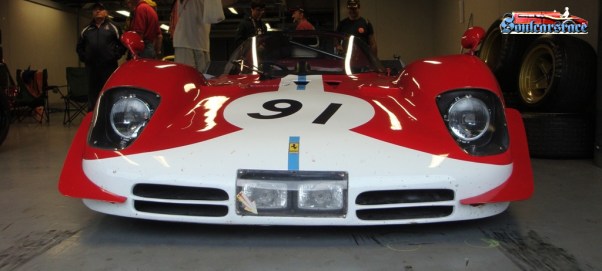
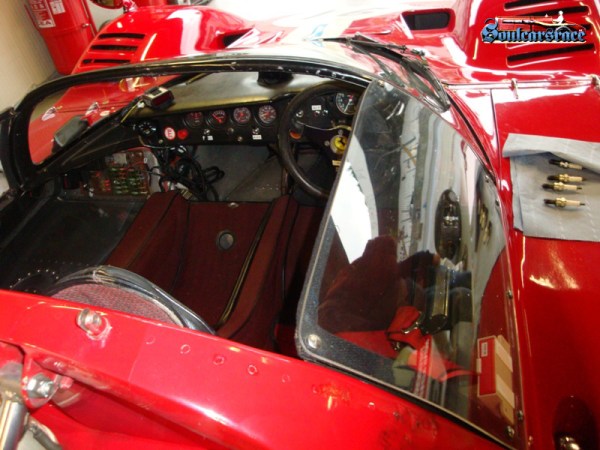
La meccanica si basava su uno schema simile a quello della 612 Can-Am, un telaio tubolare posteriore integrato alla scocca centrale, unito a una logica da formula uno per quanto riguarda il blocco motore-cambio (posteriore), radiatori posizionati dietro il posto di guida e serbatoi aeronautici centrali. Nell’area anteriore era posizionato il radiatore dell’olio e la ruota di scorta, obbligatoria (poi spostata dietro nella 512M). Le prime esperienze in gara non furono entusiasmanti, in quanto l’auto essendo stata preparata molto rapidamente necessitava di diversi perfezionamenti.
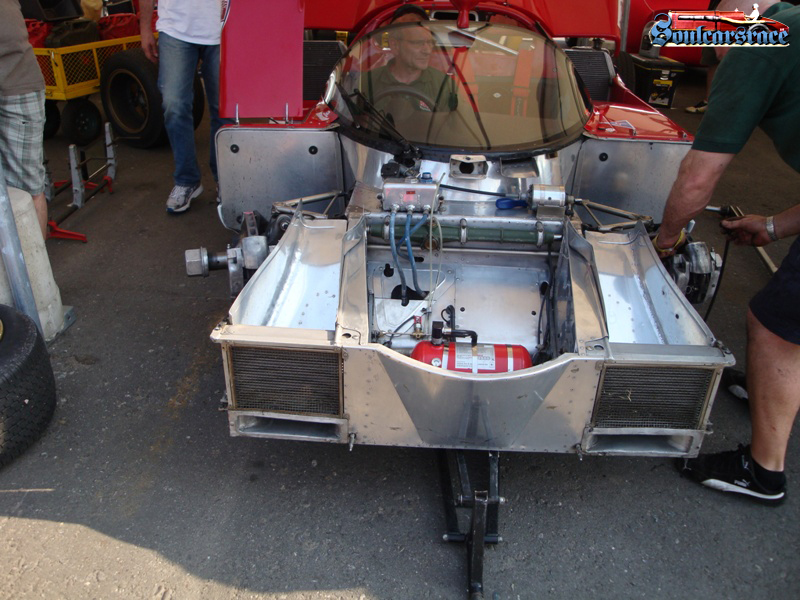
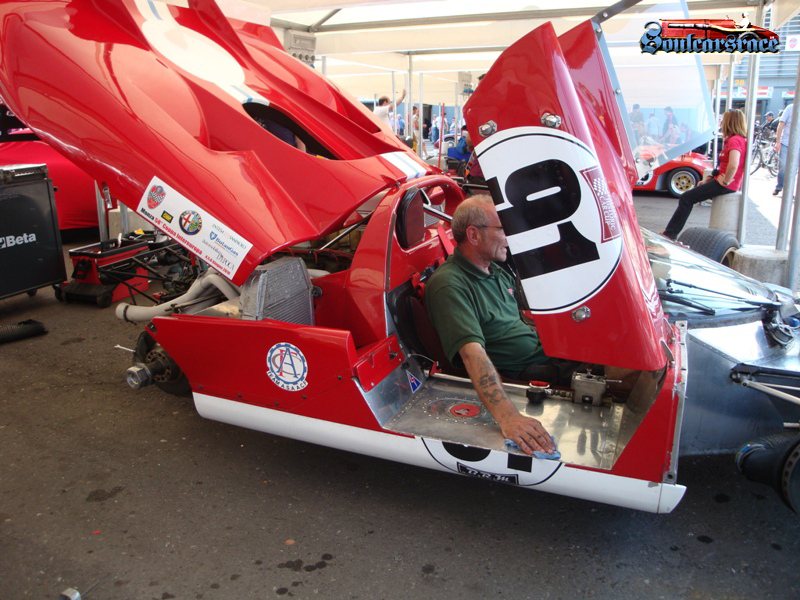
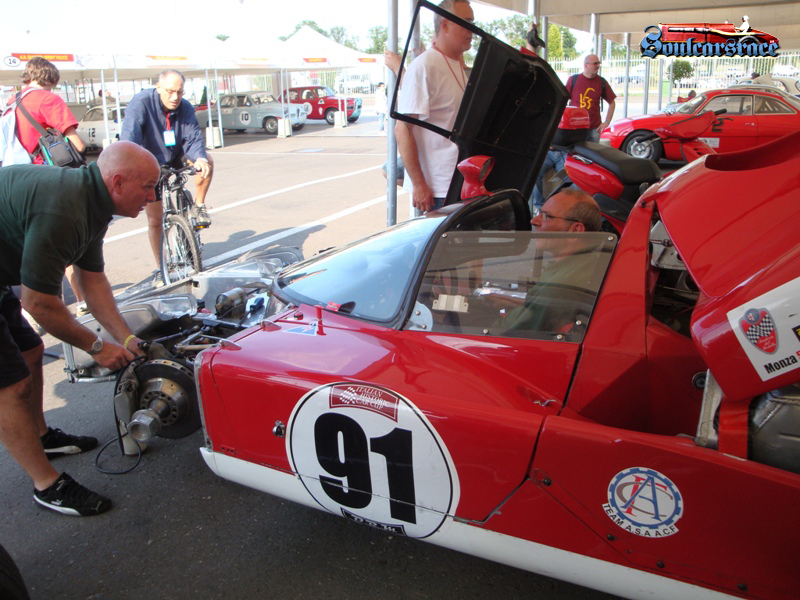

La Ferrari 512S alla Coppa Intereuropa Storica 2011, Autodromo di Monza – Foto Soulcarsrace
La stagione si aprì il primo febbraio del 1970 con la 24 ore di Daytona. Le Porsche 917 dominarono e delle cinque 512S schierate, solo quella di Andretti/Merzario/Ickx riuscì a concludere la gara, tagliando il traguardo in terza posizione.Embed from Getty Images
Daytona International Speedway –gennaio 1970: Mario Andretti entra nella 512s per effettuare alcuni giri di prova prima della 24 ore di Daytona. (Photo by ISC Images and Archives via Getty Images) – Daytona International Speedway – January 1970: Mario Andretti gets set to take a Ferrari 512S out for some practice laps prior to the 24 Hours of Daytona at Daytona International Speedway. (Photo by ISC Images and Archives via Getty Images)
Embed from Getty Images24 Ore di Daytona – Febbraio 1970: la Gulf Porsche precedono la 512 di Andretti (Foto by ISC Images & Archives via Getty Images) – 24 hours of Daytona – February 1970: Gulf Porsche 917K prototypes lead Mario Andretti’s 512S. (Photo by ISC Images & Archives via Getty Images)
Il 21 marzo a Sebring vi fu il secondo appuntamento della stagione, con la 12 ore. Le cose andarono un po’ meglio.
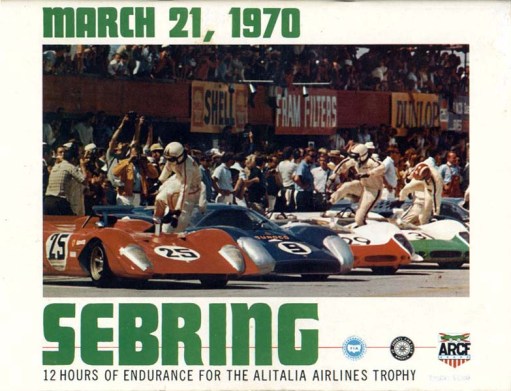
Durante la competizione Mario Andretti che conduceva la gara con una delle quattro 512s schierate, si fermò per un guasto. Il Direttore Sportivo Franco Gozzi, decise allora di passare l’auto dei piloti: Vaccarella e Giunti (appena arrivato dalla Alfa Romeo) ad Andretti, che poi tagliò per primo il traguardo. Anche alla 1000 km di Brands Hatch le 917 dominarono, mentre la 512 di Amon/Merzario arrivò quinta. Purtroppo a questo punto, venne chiesto all’Ing.Forghieri di sospendere il proprio impegno sul progetto 512s, per dedicarsi completamente allo sviluppo della 312B per il campionato F1.
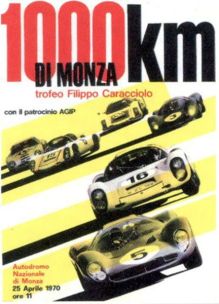
Alla 1000 km di Monza le 512 arrivarono seconda (Giunti/Vaccarella/Amon), terza (Surtees/Schetty) e quarta (Amon/Merzario). La 512S aveva dimostrato di non di poter competere con le Porsche 917, che correvano già dal 1969. Le migliorie poi apportate all’auto all’insaputa di Forghieri, nella realtà l’avevano peggiorata. Il muso, inizialmente lasciato vuoto sul lato inferiore per dare una maggiore stabilità in curva, era stato chiuso. Ciò rendeva l’auto molto veloce in rettilineo, ma con poca aderenza in curva. Ferrari era furente. Non si capacitava di come un auto vincente poteva essere stata rovinata in quel modo. Anche nelle gare successive i risultati non furono convincenti.
Autodromo di Monza – 25 aprile 1970 – 1000 km di Monza, la partenza. (Photo by Rainer W. Schlegelmilch/Getty Images) –Autodromo di Monza – april 25 1970 – The start of 1000 km di Monza. (Photo by Rainer W. Schlegelmilch/Getty Images)
Autodromo di Monza – 25 aprile 1970 – 1000 km di Monza, la Porsche Gulf 917 K alla guida di Pedro Rodriguez/ Leo Kinnunen precede la Ferrari SEFAC Ferrari 512S Spider di Ignazio Guinti/Nino Vaccarella (Photo by Rainer W. Schlegelmilch/Getty Images) – Autodromo di Monza – april 25 1970 – 1000 km di Monza. The #7 JW Automotive Engineering Gulf Porsche 917 K driven by Pedro Rodriguez of Mexico and Leo Kinnunen of Finland leads the #3 Spa Ferrari SEFAC Ferrari 512 S Spyder driven by Ignazio Guinti and Nino Vaccarella. (Photo by Rainer W. Schlegelmilch/Getty Images)
Autodromo di Monza – 25 aprile 1970 – 1000 km di Monza, la Ferrari 512S Scuderia Picchio Rosso alla guida di Corrado Manfredini. (Photo by Rainer W. Schlegelmilch/Getty Images) – Autodromo di Monza – april 25 1970 – 1000 km di Monza. Corrado Manfredini drives the #5 Scuderia Picchio Rosso Ferrari 512 S. (Photo by Rainer W. Schlegelmilch/Getty Images)
Autodromo di Monza – 25 aprile 1970 – 1000 km di Monza, la Ferrari SEFAC Ferrari 512S Spider di Ignazio Guinti/Nino Vaccarella (Photo by Rainer W. Schlegelmilch/Getty Images) – Autodromo di Monza – april 25 1970 – 1000 km di Monza. Ignazio Guinti drives the #3 Spa Ferrari SEFAC Ferrari 512 S Spyder. (Photo by Rainer W. Schlegelmilch/Getty Images)
Targa Florio, 3 maggio 1970 – I ragazzi esultano al passaggio di Nino Vaccarella al volante della Ferrari 512S SEFAC ITA4 di Vaccarella/Giunti. (Photo by Rainer W. Schlegelmilch/Getty Images) – Targa Florio, 03 May 1970 – Nino Vaccarella at the wheel of the Vaccarella/Giunti Ferrari 512S ITA4 SEFAC pass cheering fans in a small Sicilian village, Italy (Photo by Rainer W. Schlegelmilch/Getty Images)
Alla Targa Florio arrivarono quinta la 512 di Ickx/Surtees e quarta quella di Giunti/Vaccarella, al Nurburgring terza l’auto di Surtees/Vaccarella e quarta quella di Parkes/Müller e a Le Mans le auto ufficiali ritirate, mentre quelle dei team privati in quarta e quinta posizione.
Embed from Getty Images24 ore di Le Mans, giugno 1970 – La 512S di Jackie Ickx/Peter Schetty nell’area box assieme alle altre auto per le verifiche tecniche pre gara. (Photo by Klemantaski Collection/Getty Images) – The 24 Hours of Le Mans, June 1970 – Cars in the scrutineering bay before race. The Ferrari in the foreground is the 512S of Jackie Ickx and Peter Schetty. (Photo by Klemantaski Collection/Getty Images)
24 ore di Le Mans – 13 giugno 1970 – Jacky Ickx prima della partenza della gara alla guida della Ferrari 512S SEFAC (Photo by Rainer W. Schlegelmilch/Getty Images) – 24 hours of Le Mans – 13th June 1970 – Jacky Ickx driver of the #5 SEFAC Ferrari 512S, before the start of the race. (Photo by Rainer W. Schlegelmilch/Getty Images)
24 ore di Le Mans – 13 giugno 1970 – La Ferrari 512S SEFAC di Jacky Ickx, durante un pit stop notturno. (Photo by Rainer W. Schlegelmilch/Getty Images) – 24 hours of Le Mans – 13th June 1970 – The #5 SEFAC Ferrari 512S of Jacky Ickx makes a nightime pit stop. (Photo by Rainer W. Schlegelmilch/Getty Images)
Le Mans – 14 giugno 1970 – Arturo Merzario alla guida della Ferrari 512 S (Photo by Rainer W. Schlegelmilch/Getty Images) – Le Mans – 14 June 1970. Arturo Merzario is driving the Ferrari 512 S (Photo by Rainer W. Schlegelmilch/Getty Images)
Con i primi successi dalla 312B, Forghieri, grazie all’aiuto di Rocchi e Salvarani, poté riprendere in mano il progetto 512S. Vennero studiate diverse modifiche e perfezionamenti, sfruttando la Galleria del vento di Stoccarda, tra cui: l’inserimento di due flap sulla coda, l’aumento della potenza fino a 620 cv, l’eliminazione dei fari centrali, l’inserimento sui fianchi di nuove prese d’aria, e una riduzione del peso di 25 kg.
Nacque così la 512M (modificata), più potente e veloce della 512S, purtroppo corse però solo con i team privati.
I risultati in gara furono però inferiori alle aspettative, quindi, anche in vista dei nuovi regolamenti in vigore a partire dal 1972, che avrebbero ridotto la potenza da 5000 a 3000 cc., il Commendatore bloccò lo sviluppo della 512M. Era infatti più ansioso di mettere a punto la nuova sport con un motore di 3000 cc. derivato dalla F1.
La 512M, così non ebbe il tempo di dimostrare le notevoli capacità tecniche. Il progetto 512 non venne però abbandonato. Già nel 1970 era stato infatti ceduto al Pilota/Ingegnere Mark Donohue (deceduto poi nel 1975 durante i test del Gp di Austria, alla guida della F1 March 751), del Team Sunoco di Roger Penske, che seppe trasformare l’auto meglio di come il Cavallino aveva saputo fare, aumentando la fama dell’auto negli Stati Uniti.
Embed from Getty Images24 Ore di Daytona – 31 gennaio 1971: la Ferrari 512 di Mark Donohue and David Hobbs, sembra vicina alla conclusione della gara. Donohue fu però coinvolto in un incidente poco prima di mezzanotte e il Team Penske, coadiuvato dal Team NART Luigi Chinetti Jr., rimise insieme in qualche modo la carrozzeria usando nastro isolante. Nonostante la perdita di numerosi giri, l’auto è riuscì a finire terza assoluta, ad appena 14 giri dal vincitore (Foto by ISC Images & Archives via Getty Images) – 24 hours of Daytona — January 31, 1971: Roger Penske’s Ferrari 512M, driven by Mark Donohue and David Hobbs, looked like this near the end of the 24 Hours of Daytona at Daytona International Speedway. Donohue was involved in a crash just before midnight and the Penske crew, assisted by the North American Race Team crew of Luigi Chinetti, Jr., put the car together, repairing the body with rolls of duct tape. Despite losing many laps, the car came back to finish third overall, just 14 laps behind the winner. (Photo by ISC Images and Archives via Getty Images)
Embed from Getty Images24 Ore di Daytona – 31 gennaio 1971: Roger Penske verifica i tempi nel corso della gara della Ferrari 512M di Mark Donohue/David Hobbs, che concluse in terza posizione. (Photo by ISC Images & Archives via Getty Images) – 24 hours of Daytona — January 31, 1971: Roger Penske keeps an eye on his charts at the 24 Hours of Daytona at Daytona International Speedway. Penske Ferrari 512M driven by Mark Donohue and David Hobbs finished third in the race. (Photo by ISC Images & Archives via Getty Images)

Partendo da una 512M, infatti il team statunitense apportò una serie di modifiche in grado di rendere l’auto strepitosa: la carrozzeria venne alleggerita, inserendo anche parti in fibra di carbonio e migliorandone l’aerodinamica, aumentando la potenza a 640 cv, ed adottando un sistema di rifornimento stile Indy, in grado di dimezzare la durata dei pit stop. Nei test delle 24 ore di Daytona stupì il pubblico per le prestazioni, ma poi in gara una serie di inconvenienti tecnici la costrinsero ad un terzo posto. La sfortuna si accanirà anche nella 12 Ore di Sebring dove verrà tamponata da una Porsche 917 e nelle gare successive, dove per diversi motivi non riuscirà a raccogliere i successi che avrebbe meritato.
24 ore di Le Mans – 12 giugno 1971 – la Ferrari 512M di Jose Juncadella/Nino Vaccarella, scuderia Montjuich (Photo by Rainer W. Schlegelmilch/Getty Images) – 24 Hours of Le Mans – 12th June 1971 – the Ferrari 512M driven by Jose Juncadella and Nino Vaccarella, team Montjuich. (Photo by Rainer W. Schlegelmilch/Getty Images)
Dalla 512 nacquero inoltre interessanti sviluppi nell’ambito del design, con la creazione di due concept cars targate Pininfarina: la Ferrari “Modulo” (vedere il post dedicato) e la Ferrari 512 S berlinetta speciale.
Pininfarina Ferrari 512 S Berlinetta Speciale, Como 1969
Embed from Getty ImagesPininfarina Ferrari 512 S Berlinetta Speciale, Salone dell’automobile di Torino, 30 ottobre 1969
FERRARI 512 THE MOVIE
Ferrari 512, an unfortunate masterpiece
The first post published on Soulcarsrace, was dedicated to the Ferrari 512. It’s only been seven months since then, and in the meantime I got to delve into this topic, but this time I based only on reliable sources, and in particular on the words and experiences of those who have experienced firsthand the development of this beautiful creature of Cavallino, Ing.Mauro Forghieri.
So this is a whole another story…
It was 1969 when Enzo Ferrari decided to challenge the following year Porsche, by participating in the international Championship for Makes in “Group 5”.
At the time, the Chief Designer, Mauro Forghieri in full of the complex design of the 312b F1, worked at the Office of advanced projects of Ferrari, headquartered in Modena.
The commitment was remarkable, not least because in order to participate in the League makes the minimum production imposed by Regulation was 25 copies, this therefore is not allowed to have second thoughts during the project. Just for the absurdity of this Regulation, Enzo Ferrari from the start, never really loved this car, whose birth was too conditioned by the rules are difficult to enforce.
The modenese company though, even with the help of FIAT, happy to challenge the German brand representing various German competitors, managed houses achieve in record time the Ferrari 512S (sports), producing the minimum number of samples required. Ferrari, however, needed to demonstrate to FIAT, that the company was working on a number of fronts, even to compensate for any failures that could arrive on F1.
The car was also provided to some private team, who had started a long-time collaboration with the Modena, which household Franchorchamps (Belgium), Filippinetti (Switzerland) and the famous NART (the ex-pilot Luigi Chinetti, winner of the 24 hours of Le Mans in 1949 on Ferrari 166 mm and from 1953 official Ferrari importer in the USA).
So describes the experience of 512 Ing.Forghieri in the book “– Mauro Forghieri30 years of Ferrari and beyond” (d. m. Buzzonetti Forghieri-Giunti ed. – 2008):
“In the project, as a starting point, we took into consideration the experience gained with the Can-Am 612 and five-liter V12 engine was created in just one month. And it was a good engine, much like the change. Chassis and aerodynamics were quite conventional and, moreover, we have not had time to bring the car in a wind tunnel not even for half an hour. In practice a madness for a car so powerful and complex – with a speed well in excess of 300 km/h – but we were aware of it.
Suffice it to say that the development of this machine was made in the winter, in December, in Sicily. The weather was so inclement weather on the circuit of Pergusa that the tests were only valid for a possible wet race. And to say the difficulties, remember to cross the Strait of Messina with materials and mechanical car, we asked aid to railways to be hosted on the ferry that usually transports trains. ”
There’s also an interesting video from italian Rai channel of 1969, about the tests at the circuit of EnnaPergusa, in Sicily:
These characteristics of the 512S: 12-cylinder engine, 4,993 .53 displacementcm³, banks 60° angle, with a capacity of 550 HP at 8,500 rpm, weight: 850 kg.
The mechanics was based on a pattern similar to that of the Can-Am 612, a tubular rear frame integrated in the central body, combined with a logic formula one as regards the engine block transmission (rear), radiators positioned behind the driver’s seat and central air tanks. In the front area was located the oil cooler and the spare wheel, obligatory (then moved behind in the 512M).
His first experiences in the race were not exciting, as the car having been prepared very quickly required various refinements.
The season opened the first February 1970 with the 24 hours of Daytona. The Porsche 917 dominated and five 512S deployed, only to Andretti/Merzario/Ickx managed to finish the race, cutting the finish line in third place.
The March 21 at Sebring was the second race of the season, with 12 hours. Things went a little better. During competition Mario Andretti leading the race with one of the four 512s deployed, stopped for a fault. Sporting Director Franco Gozzi, decided to pass the cars of drivers: Vaccarella/Giunti (just arrived from Alfa Romeo) for Andretti, who then cut the finish line first.
The 1000 km Brands Hatch the 917 dominated, while 512 of Amon/Merzario finished fifth.
Unfortunately at this point, asked Ing.Forghieri to suspend its commitment on project 512s, to pursue the development of the 312B F1 Championship.
At the 1000 km of Monza the 512 came second the car of Giunti/Vaccarella/Amon, third the 512 of Surtees/Schetty and fourth the one of Amon/Merzario.
The 512S had demonstrated not to be able to compete with the Porsche 917, which ran since 1969. Then improvements made to the car unbeknownst to Forghieri, in reality they had worsened. The snout, initially left blank on the bottom to give greater stability when cornering, was closed. This made the car very fast on the straights, but with little grip when cornering. Ferrari was furious. Do not realize how a winning car may have been ruined that way.
Even in the later races results were not convincing. Targa Florio came fifth the 512 of Ickx/Surtees and fourth the car of Giunti/Vaccarella, at the Nurburgring third the car of Surtees/Vaccarella and fourth the one of Parkes/Müller and in Le Mans retired the official cars, while those of private teams arrived in fourth and fifth position.
With the first successes from the 312B, Forghieri, thanks to help from Rocchi andSalvarani, could take the project 512S. They studied several changes and improvements, using the wind tunnel in Stuttgart, including the insertion of two flaps on the tail, the increase of power up to 620 HP, the elimination of central headlights, and on the sides new air intakes and a reduction in weight of 25kg. Thus was born the 512M (modified), the most powerful and fastest 512S, unfortunately ran only with private teams. The race results were lower than expectations, then, in view of the new regulations in force since 1972, that would reduce the power from 5000 to 3000 cc, Enzo Ferrari stopped the development of 512M. He was more anxious to develop the new sport with a 3000 cc engine, derived from F1.
The 512M, so had no time to demonstrate the considerable technical abilities.
The project 512 was not abandoned. Already in 1970 was transferred to pilot/Engineer Mark Donohue (died in 1975 during the Austria Grand Prix test driving F1 March 751), of Sunoco Team (owned by Roger Penske). Donohue in fact, knew how to transform the car, better than Ferrari had been able to do, increasing popularity of the Italian factory in the United States.
Starting from a 512M, the american team issued a series of changes that made the car amazing: the body was lightened, including carbon fiber parts and improving aerodynamics, increasing the power to 640 HP, and taking a Indy style refueling system, able to halve the length of the pit stop. In tests of the 24 hours of Daytona astonished the audience for the performance, but then in the race a series of technical problems forced a third place. The misfortune rages also in the 12 hours of Sebring where is a Porsche 917 buffered and in subsequent races, where for various reasons fail to collect the accomplishments that he deserved.
From 512 also were interesting developments within the design, with the creation of two concept cars badged Pininfarina: the Ferrari 512S berlinetta speciale and the Ferrari “Modulo”. See the dedicated post
FERRARI 512 THE MOVIE
I migliori risultati della 512 S / The best results of the 512 s
| 1.2.1970 | 24 h Daytona | 28 | Andretti / Merzario / Ickx | 3rd |
| 21.3.1970 | 12 h Sebring | 21 | Giunti / Vaccarella / Andretti | 1st |
| 12.4.1970 | Le Mans Test | 5 | Ickx / Giunti / Schetty | 2nd |
| 19.4.1970 | 500 km Zolder | 4 | Loos / Kelleners | 1st |
| 25.4.1970 | 1000 km Monza | 1 | Amon / Merzario | 4th |
| 25.4.1970 | 1000 km Monza | 2 | Surtees / Schetty | 3rd |
| 25.4.1970 | 1000 km Monza | 3 | Giunti / Vaccarella / Amon | 2nd |
| 3.5.1970 | Targa Florio | 6 | Vaccarella / Giunti | 3rd |
| 17.5.1970 | 1000 km Spa | 20 | Ickx / Surtees | 2nd |
| 24.5.1970 | Hillclimb Trieste-Opicina | Gianpiero Moretti | 1st | |
| 31.5.1970 | 1000 km Nürburgring | 55 | Surtees / Vaccarella | 3rd |
| 31.5.1970 | 1000 km Nürburgring | 58 | Parkes / Müller | 4th |
| 11.7.1970 | 6 h Watkins Glen | 92 | Andretti / Giunti | 3rd |
| 6.9.1970 | 200 mile Fuji | 2 | Gianpiero Moretti | 1st |
| 3.10.1970 | Coupes du Salon | José Juncadella | 2nd | |
| 18.10.1970 | 1000 km Paris | 6 | Juncadella / Jabouille | 2nd |
| 20.12.1970 | Copa Brasil Interlagos | Gianpiero Moretti | 2nd | |
| 28.12.1970 | Copa Brasil Sao Paulo | Gianpiero Moretti | 2nd | |
| 31.1.1971 | 24 h Daytona | 23 | Bucknum / Adamowicz | 2nd |
I migliori risultati della 512 M / The best results of the 512 m
| 7.11.1970 | 9 h Kyalami | 4 | Ickx / Giunti | 1st |
| 31.1.1971 | 24 h Daytona | 6 | Donohue / Hobbs | 3rd |
| 2.5.1971 | Interserie Imola | 22 | Arturo Merzario | 1st |
| 2.6.1971 | GP Repubblica Vallelunga [S+1.0] | 10 | Mike Parkes | 1st |
| 13.6.1971 | 24 h Le Mans | 12 | Posey / Adamowicz | 3rd |
| 4.7.1971 | Coupes Benelux | 156 | Hughes de Fierlant | 1st |
| 25.9.1971 | Tour de France | 142 | Juncadella / Guénard / Jabouille | 2nd |
| 31.10.1971 | GP Japan | Gregg Young | 1st | |
| 1971 | 12 h Ecuador | 2 | Young / Adamowicz | 1st |
| 19.3.1972 | MN GT Thruxton | 163 | Peter Brown | 1st |
| 26.3.1972 | MN GT Snetterton | 160 | Peter Brown | 1st |
| 7.5.1972 | MN GT Croft | Peter Brown | 1st | |
| 21.5.1972 | Interserie Silverstone | 50 | Willie Green | 2nd |
| 28.5.1972 | MN GT Thruxton | Peter Brown | 1st | |
| 18.6.1972 | MN GT Thruxton | Peter Brown | 1st | |
| 2.7.1972 | MN GT Silverstone | 20 | Neil Corner | 1st |
| 3.9.1972 | 500 km Interlagos | 28 | Herbert Müller | 3rd |
| 22.7.1973 | Karlsruhe Hockenheim [S+1.6/GT+2.0] | 361 | Herbert Müller | 1st |
| 26.8.1973 | Hockenheim [SRP] | Herbert Müller | 1st | |
| 29.9.1974 | Interserie Hockenheim | Cox Kocher | 3rd |
(source: racingsportscar.com)
 Soul Cars Race
Vous connaissez la Brutus ? ! ( Musée des techniques de Zinsheim;
en Alemagne !
"Mi piace""Mi piace"
Hi francis,
yes i know the Brutus. Thank you for you suggestion.
In future i’ll probably make a post about that car.
Bye, Vittorio
"Mi piace""Mi piace"
L’ha ribloggato su BLUBAZ – il blog del Tubaz.
"Mi piace"Piace a 1 persona
Grazie Tubaz per aver ribloggatop il mio vecchio post sulla 512… Domenica c’ero anch’io Monza, che splendide emozioni… ciao, vittorio
"Mi piace""Mi piace"
Ciao Vittorio, piacere di conoscerti “virtualmente”. Quest’anno mi è andata bene e ho visto tutti e 3 gli eventi di Autostoriche a Monza. Questo scorso era inaspettato e a parte la mancanza di tutti i club e della relativa atmosfera, offriva comunque davvero tanta bella robettina 🙂 Molto interessante il tuo blog. Il mio meno, era nato come appunti personali online per essere ubiqui, poi mi ha preso la Cristoforetti mania e poi ho perso lo slancio. Chissà che non possa mutare in un fotoblog di auto con foto mie.
Ciao!
"Mi piace""Mi piace"
Ciao il piacere è mio.
Io faccio l’architetto, e ed oltre ad essere un grande amante delle auto da corsa, mi piace molto lo spazio e la fantascienza. Molto bello il tuo blog “metafisico..” Stai anche tu dalle parti di milano? Che fai di bello?
Ciao, vittorio
"Mi piace""Mi piace"